Regenerative Business Practices: Supporting Micro, Small and Medium Enterprises’ Transition to a Net-Positive Circular Economy

As humanity confronts the escalating challenges of climate change, resource scarcity, and biodiversity loss, the role of regenerative business practices (RBPs) within circular economy (CE) frameworks remains critically underexplored. This article aims to address this gap, particularly in the context of micro, small and medium enterprises (MSMEs), as they represent 99.8% of businesses in many European economies and thus play a vital role in CE transitions. It employs the Three Horizons Framework to investigate the limitations in existing CE definitions (Horizon 1), through emergent RBPs (Horizon 2), towards a net-positive CE (Horizon 3).
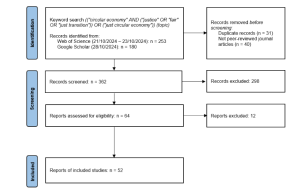
Through this lens, it explores how RBPs are currently embedded in CE literature and can potentially enable MSMEs to transition towards a net-positive CE. Utilising PRISMA methodology, thematic coding, and co-occurrence analysis, our study uncovers a fragmented understanding of regeneration within existing CE literature.
Key findings include clarity on why CE is stuck in a net-zero ‘restoration’ loop and a curated typology of RBPs that are increasingly applied by MSMEs, enabling a shift towards net-positive CE.
The review discusses the complexity of integrating RBPs, and the need for more empirical studies on how RBPs can act as deep leverage points, moving away from shallow leverage points such as material flows, subsidies and tax driven interventions. Finally, we offer insights on practical applications of RBPs for MSME entrepreneurs, managers, and leaders along with recommendations for further exploration of sector-specific applications of RBPs.