Embodied Carbon and the Climate Impact of our Housing
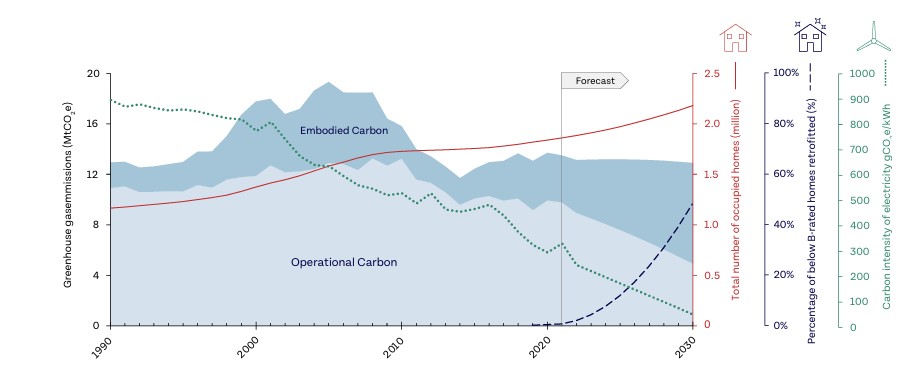
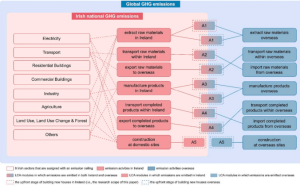
The housing crisis and the climate crisis are inseparable challenges. Current housing policy in Ireland largely concentrates on operational energy efficiency, yet this overlooks the embodied carbon – the emissions generated through the extraction, manufacture, transport, and assembly of building materials, as well as the construction of infrastructure and landscaping. This research provides a comprehensive study of the embodied carbon impact of housing typologies in Dublin, ranging from detached houses to estate housing, apartments, and the emerging “missing middle” medium-density models.
By assessing not only the dwellings themselves but also neighbourhood-scale elements such as roads and external landscaping, the study offers a holistic view of the carbon cost of new housing. Results highlight that detached and low-density housing types are the most carbon-intensive per person, due to their larger dwelling sizes, greater land consumption, and extensive infrastructure requirements. In contrast, higher-density forms such as apartments distribute emissions more efficiently across shared infrastructure, though they typically rely on more carbon-intensive concrete structures.
A key finding is the importance of balancing density and land use. Low-density expansion consumes valuable landscapes that could otherwise act as carbon sinks or be used for agriculture. Compact growth strategies, as promoted by Ireland’s National Planning Framework, are therefore essential to meet both housing demand and climate targets.
The research proposes clear pathways for decarbonisation, including adopting lower-carbon materials such as timber and bio-based insulation, rethinking urban density, and integrating nature-based solutions. These strategies can guide policymakers, developers, and communities towards more sustainable, resilient, and low-carbon housing futures.