Designing for reuse in timber buildings: The environmental benefits of aligning the time of nature and time of use
Abstract
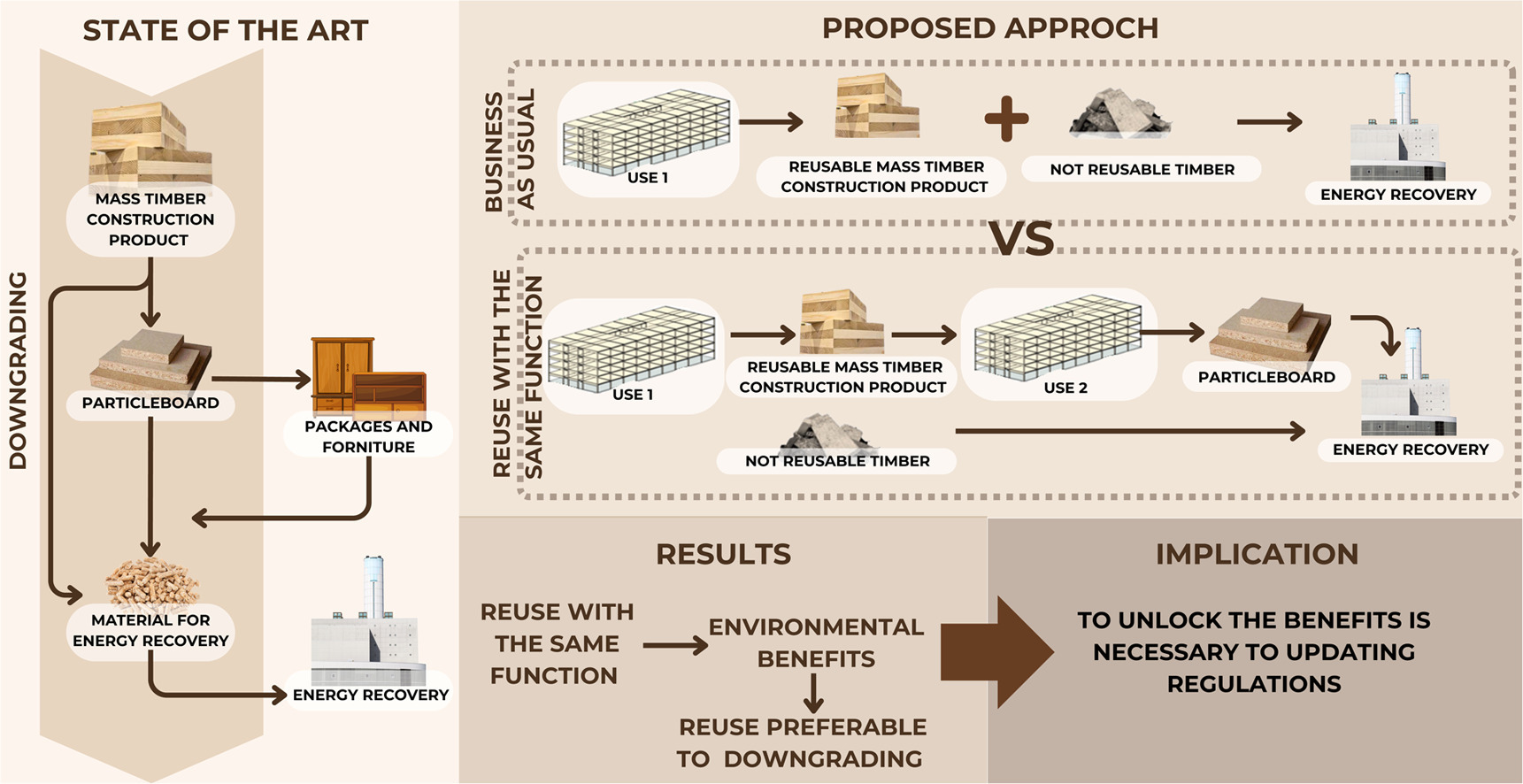
Timber is emerging as a key bio-based material for decarbonizing the construction sector and supporting circular economy goals. This study explores how Design for Deconstruction and Reuse can extend the timber value chain by enabling the reuse of structural components with the same function after disassembly. Current regulations often prioritize energy recovery, thereby limiting the circular potential of timber. We address this gap by modelling ex-ante cascading reuse scenarios for a timber building and assessing the generated environmental benefits through Life Cycle Assessment.
Results show that maintaining the structural function of timber across multiple lifecycles significantly reduces environmental impacts compared to downcycling or incineration. This approach provides a systems perspective on timber use, aligning with the need for sustainable, bio-based solutions in the construction industry. To fully leverage timber’s potential for carbon sequestration and resource conservation, standards must evolve to support reuse strategies that preserve material value across the built environment.