Campus for Living Cities/
AMBITARE Architecture Strategies
Project Details

Location(City/Country):
Madrid / Spain
Tipology:
Under Construction Educational
Year (Design/Construction):
- / -
Area (Net/Gross):
- / 22700 m2
Operational Carbon emissions (B6) kgCO2e/m2/y:
-
Embodied Carbon emissions (A1-A3) kgCO2e/m2:
-- Timber-based low-carbon structure – The building uses cross-laminated timber (CLT) as the main structural system (with concrete limited to the basement), significantly reducing embodied carbon and storing CO₂ compared to conventional construction.
- Passive design & high energy efficiency – The project is designed following bioclimatic and passive design principles, minimising energy demand and aiming for near-zero or net-positive energy performance during operation.
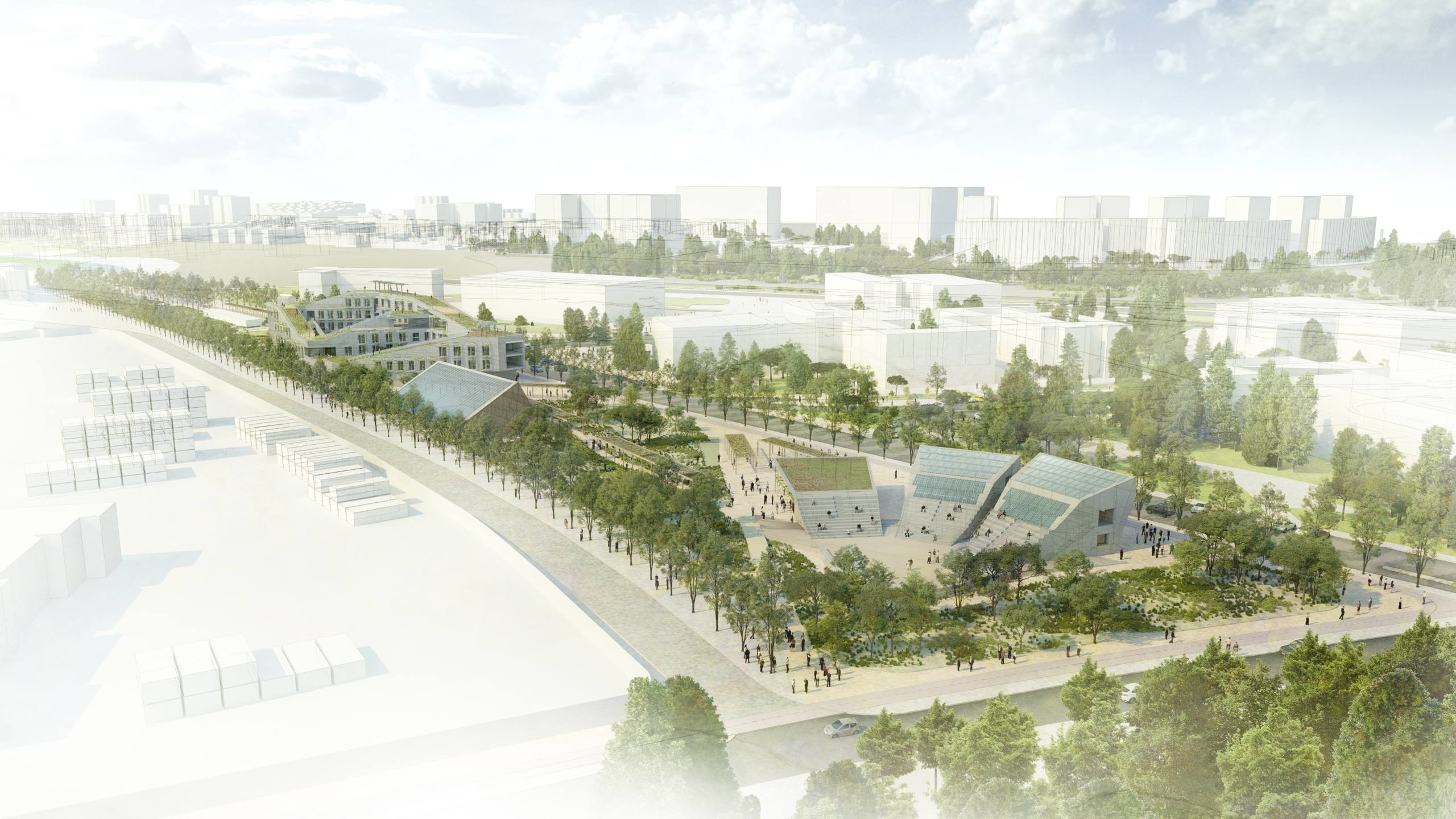
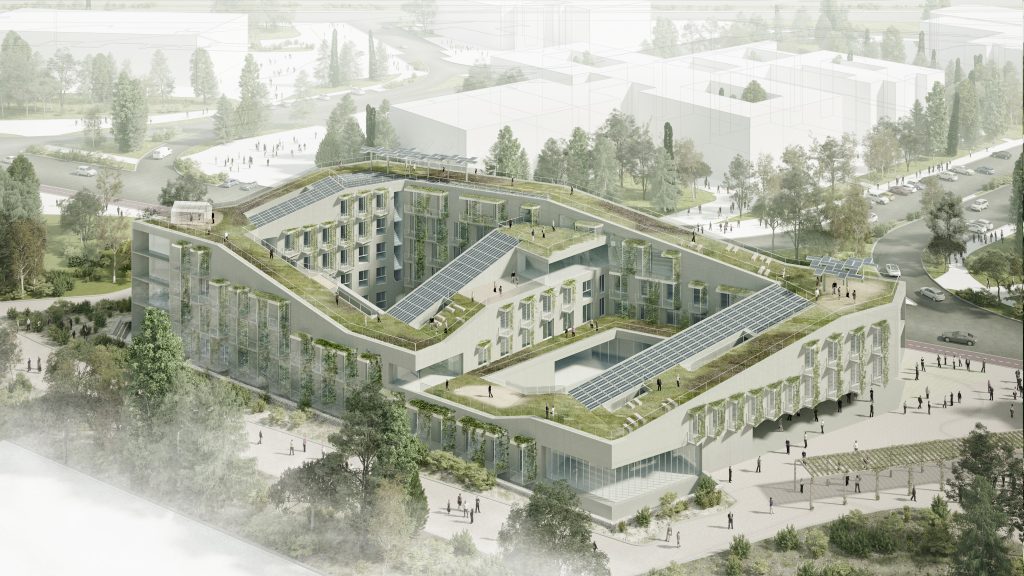
- Integration of green spaces & biodiversity – Extensive green areas, landscaped courtyards and green roofs improve biodiversity, reduce the urban heat-island effect and enhance microclimatic comfort.
- Sustainable water and resource management – Strategies include low-consumption systems, efficient water use and circular-economy principles, reducing both water demand and material impact over the building’s life cycle.
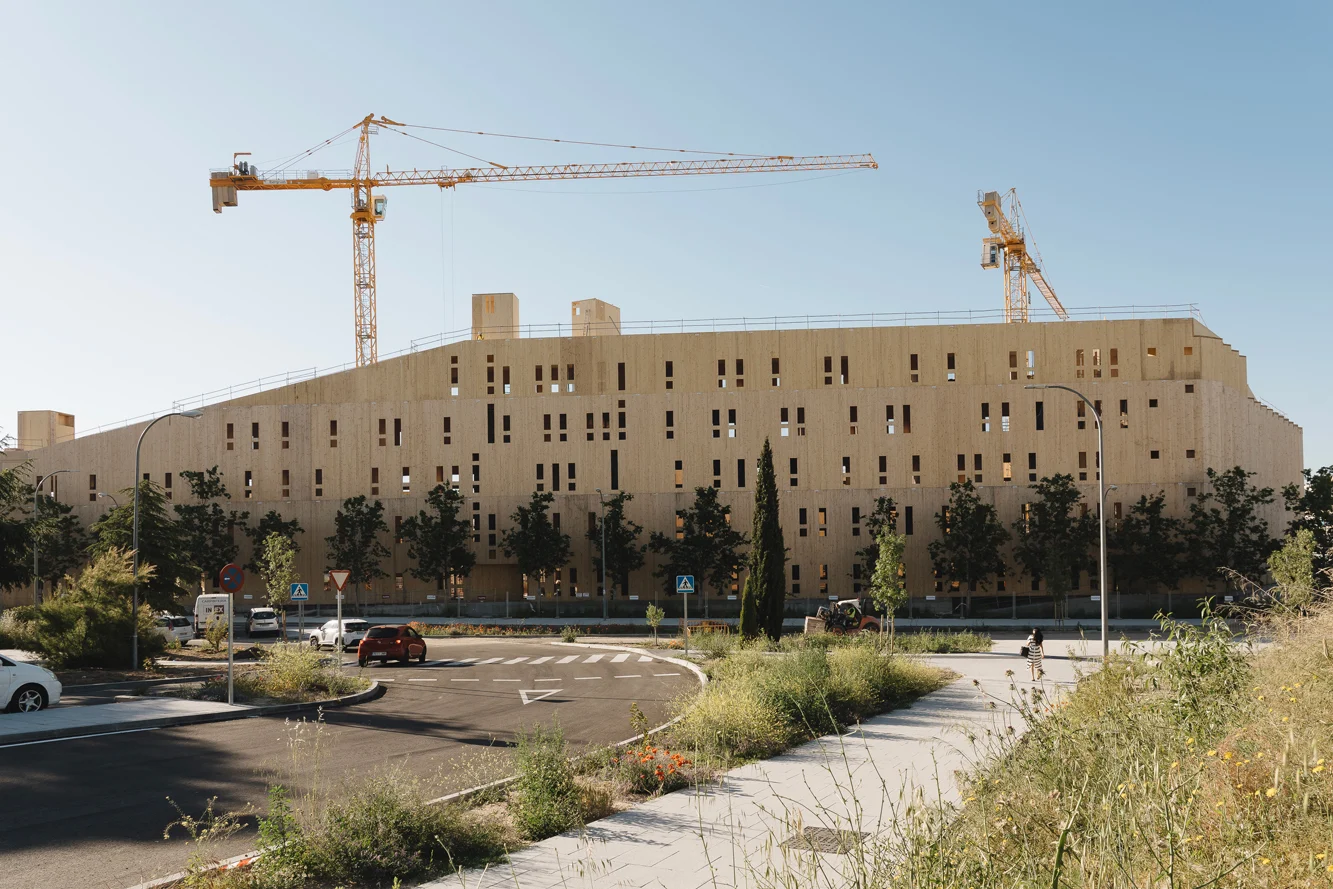
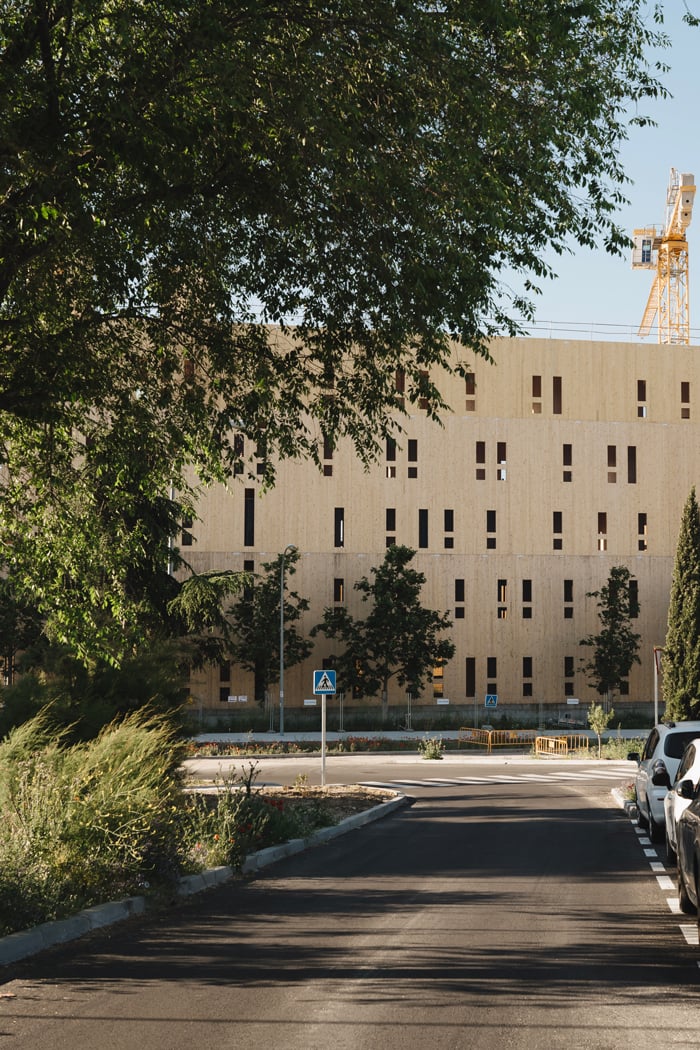
The ‘Green Campus for Living’ student residence at UPM is a flagship example of sustainable timber construction in Spain, realised by our trusted partners, Madergia.
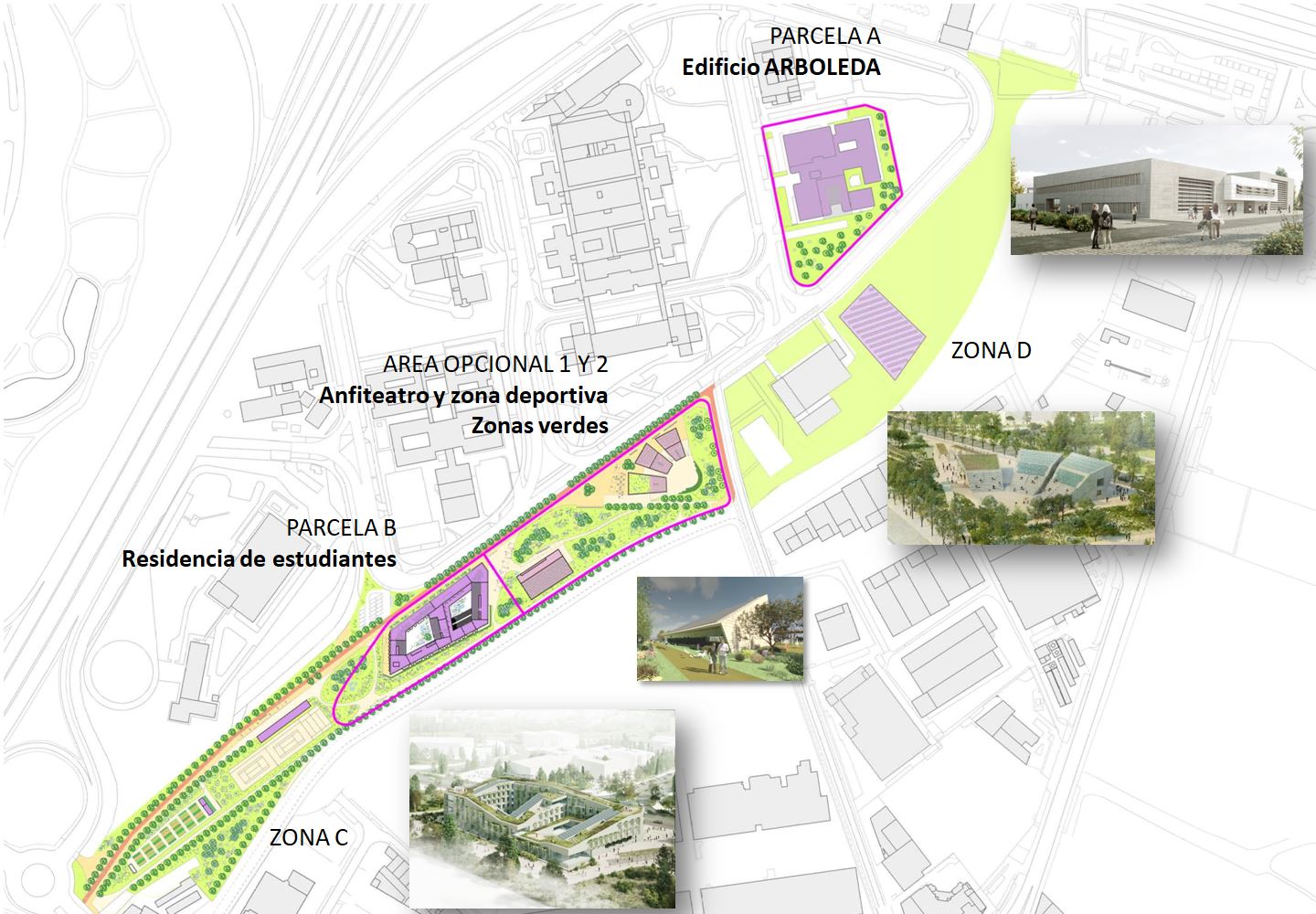
Designed to be energy self-sufficient, the building is part of the ‘Campus for Living Cities’ initiative, which is transforming the university’s South Campus into a model of urban sustainability.
Overview
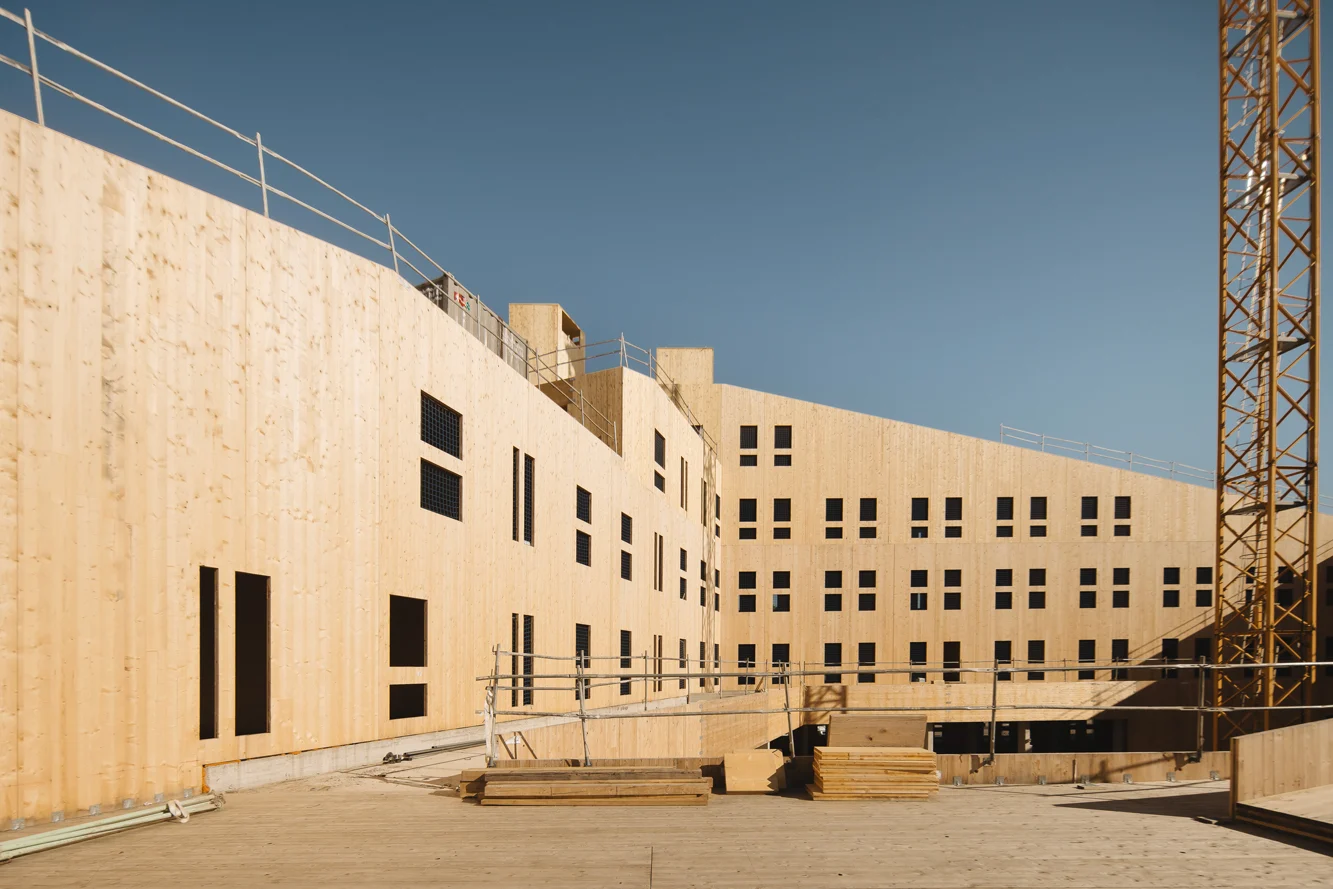
With over 13,800 m² of built area, the residence includes 342 rooms, social spaces, and 22,700 m² of landscaped areas. Beyond the student residence, the project includes the Arboleda building and an Impact Hub, which will serve as spaces for research and teaching.
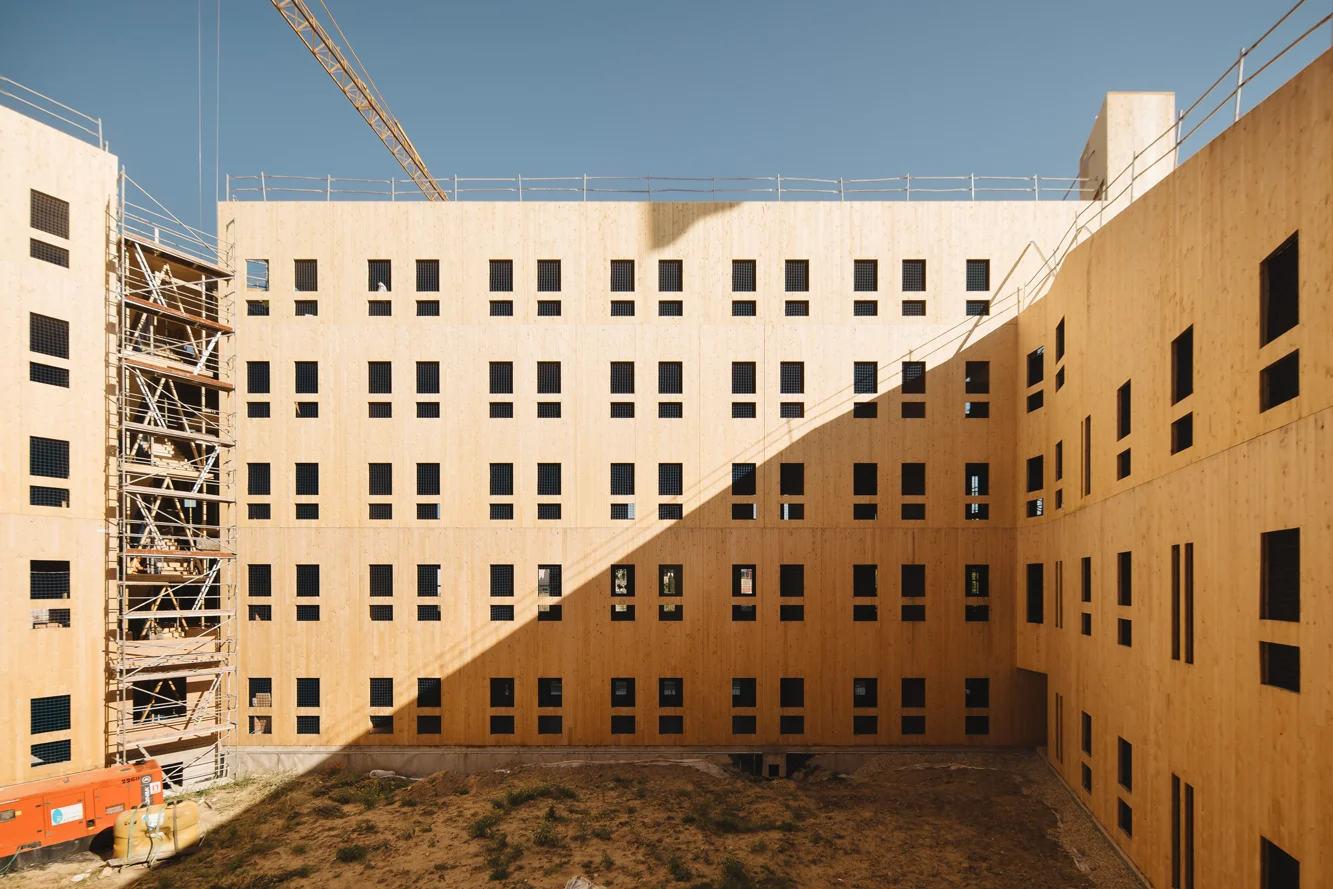
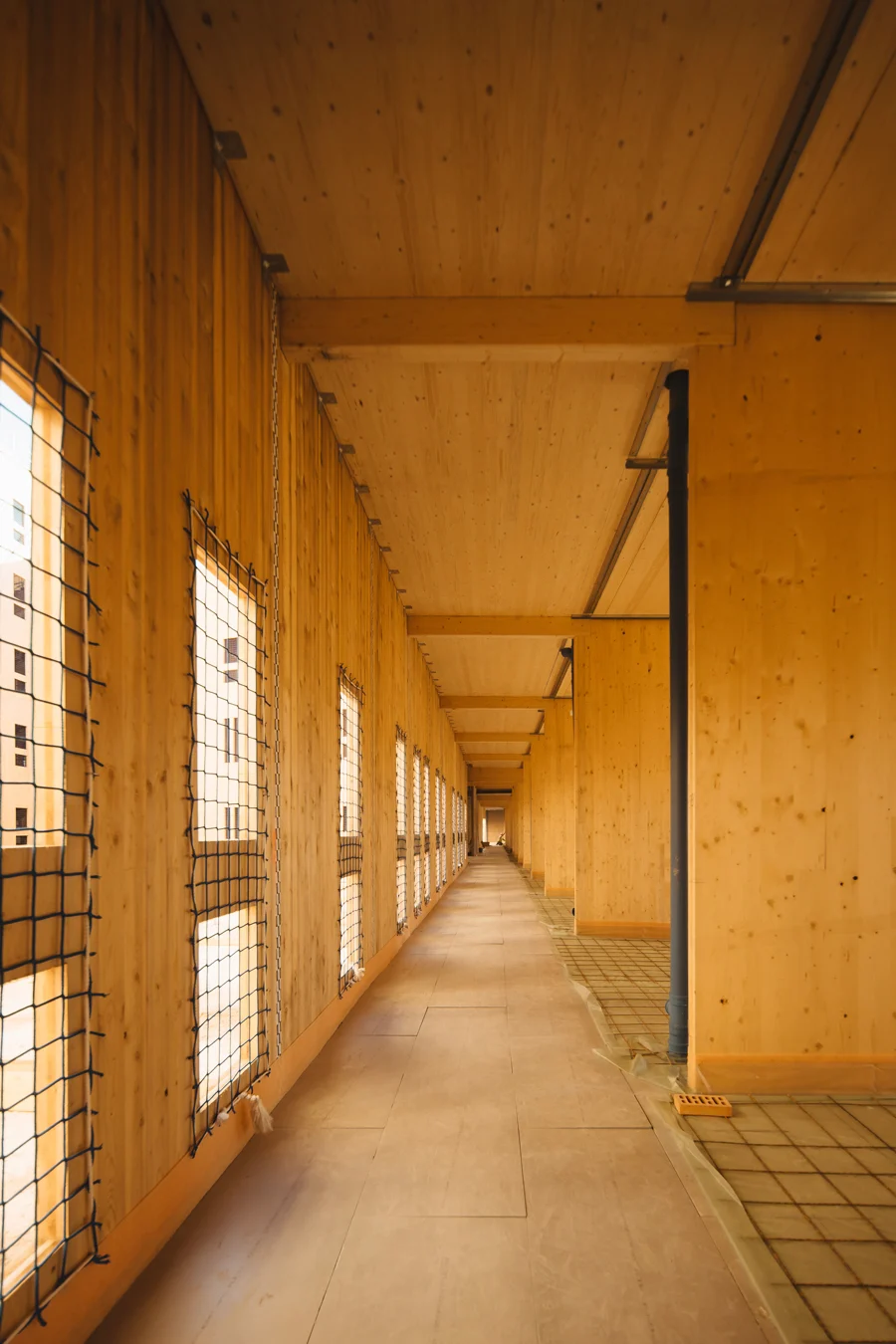
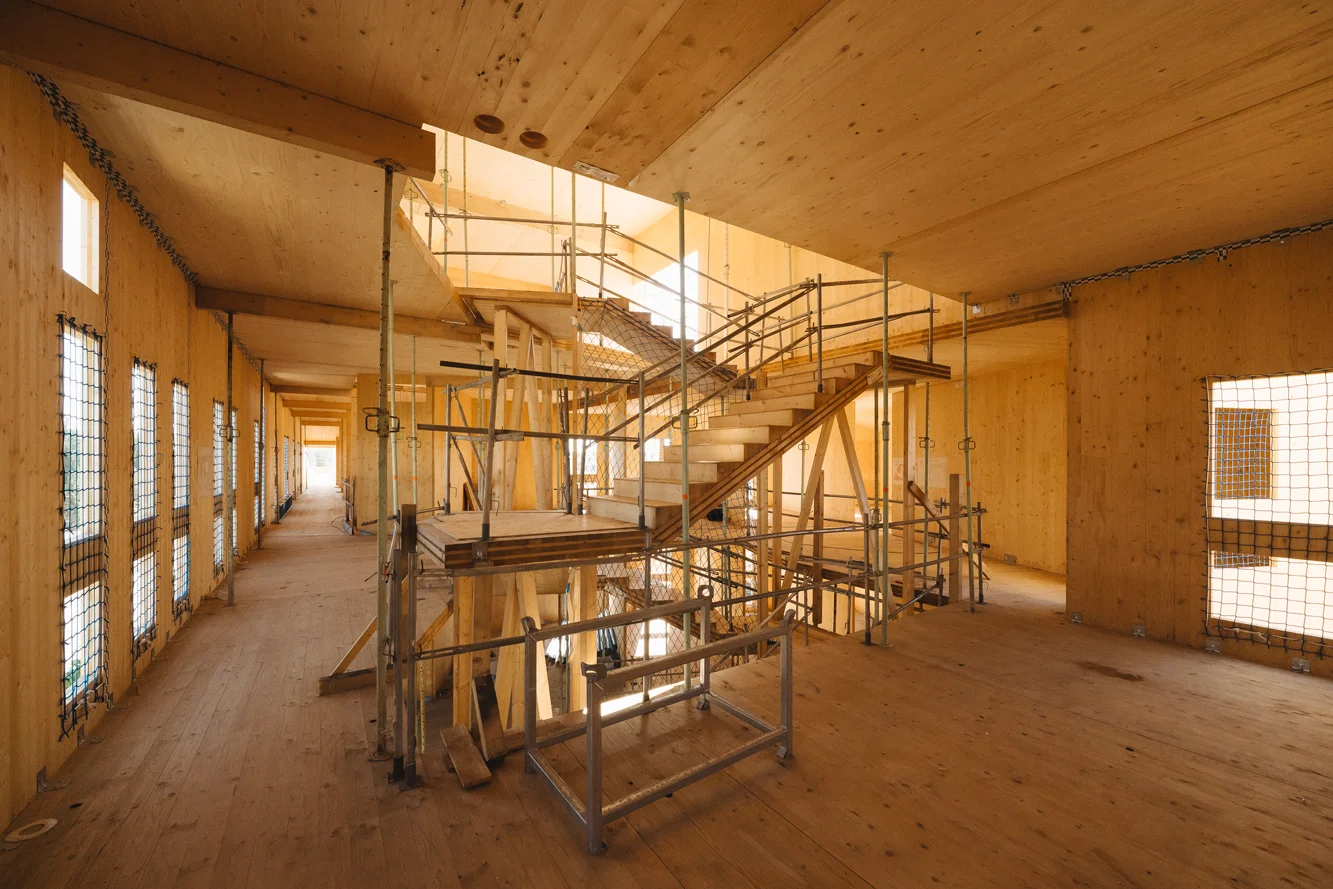
The structure combines reinforced concrete for the basement and part of the ground floor, with 2,465 cubic meters (m³) of engineered timber, primarily cross-laminated timber (CLT).
Sustainable by design
The architects selected a Sylva™ kit of parts by Stora Enso for its low carbon footprint, and ability to install rapidly.
The Sylva CLT elements generated only 130 tonnes of greenhouse gases (CO₂e) to manufacture and 113 tonnes of CO₂e to transport.
Compared to the 1,878 tonnes of carbon dioxide that the trees removed while they were growing and will store in for the school this is a small fraction. Choosing Sylva CLT elements instead of non-renewables avoided 2,818 tonnes of greenhouse gases. Sources: EPD | NTM | SLU.
Construction Efficiency
Timber construction began in mid-January and within four and a half months, the five-storey envelope was completed. Madergia’s team highlighted the predictability, cleanliness, and logistical efficiency of timber construction compared to conventional methods.
Transport and Logistics
The Sylva components were shipped from Stora Enso’s CLT mill in Bad St. Leonhard, Austria, to the construction site in Madrid — a journey of approximately 1,653 km by semi-trailer flatbed trailers. This long-distance delivery demonstrates the feasibility of cross-border timber logistics and the reliability of prefabricated timber solutions to still meet a low carbon footprint.
Architect’s point of view
This is AMBITARE’s first project using a Sylva™ CLT kit of parts, and they praised its design flexibility and adaptability during construction.
The project has been recognised as a prototype for sustainability and decarbonisation under the European Deep Demonstration programme by EIT Climate-KIC and the City of Madrid.
Publications
The project was featured in Madera Sostenible as a leading example of timber innovation in Spain.
Awards
The project was the winning proposal in the international Reinventing Cities competition organised by the C40 Cities Climate Leadership Group. This award recognises innovative, zero-emission urban regeneration projects that promote sustainability, biodiversity, and climate resilience.
The winning concept, titled Campus for Living Cities, was selected for its holistic approach to decarbonisation and its integration of timber construction, energy efficiency, and green urban planning.
- Architect: AMBITARE Architecture Strategies
– Brezo Martos Marcos
– Daniel Otero García - Partner of Stora Enso: Madergia
- Timber Engineer: Dr Miguel Nevado
- Developer: Unexum Real Estate
- Main Contractor: RUESMA
- Photos: Pablo García Esparza